

Campground near the Ruta del Cister

À seulement 30 minutes du camping près de Salou, la Ruta del Cister réunit trois monastères cisterciens médiévaux parmi les plus remarquables de Catalogne : Santa Maria de Poblet, Vallbona de les Monges et Santes Creus.
Founded between the 12th and 13th centuries, these three architectural gems are nestled in the valleys and foothills of the mountains in the Tarragona hinterland, offering a complete change of scenery, far from the hustle and bustle of the coast.
LA PINEDA
Culture and
heritage
Cistercian monasteries to explore along the way
The Cistercian Route offers a unique cultural and heritage experience in Catalonia, combining medieval architecture, spirituality, and unspoiled natural landscapes. It can be explored by car in a single day, with stops at each of the three monasteries. For more information:
Cister Road Management Office. San José, 18 – 43400 Montblanc
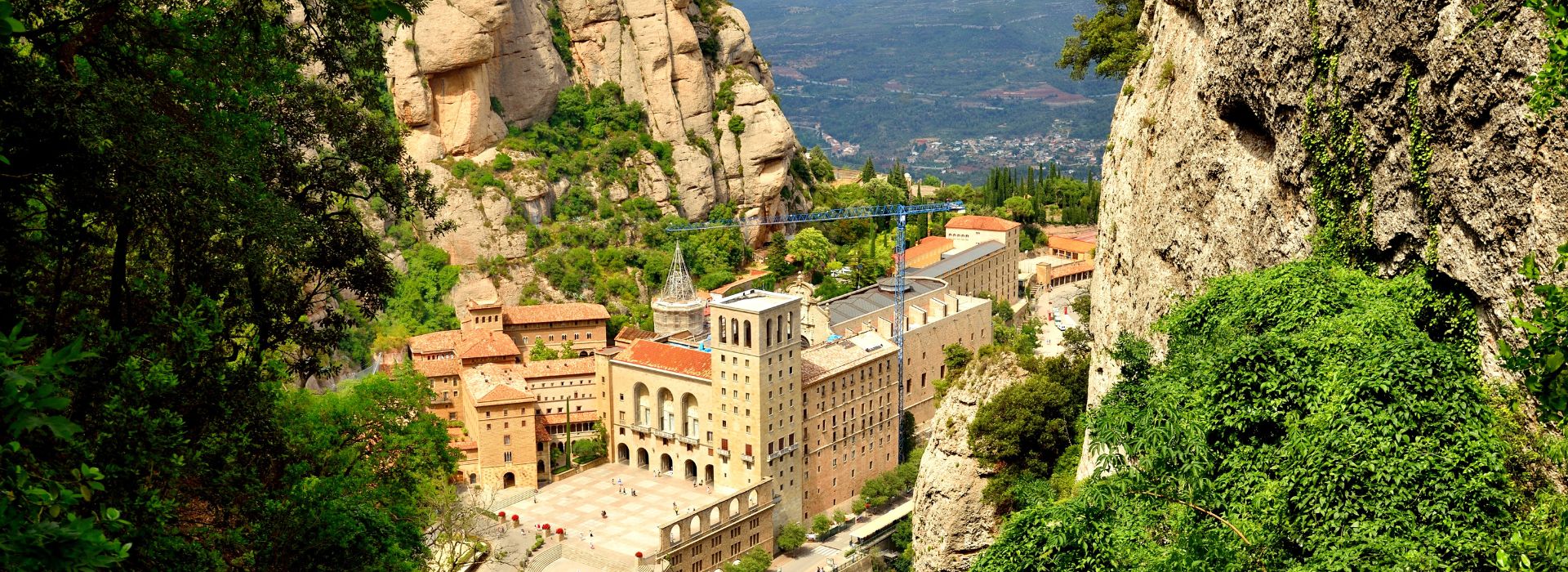
In the Alt Camp and Conca de Barberà regions, and in the Urgell region of Lleida, there are three important Cistercian monasteries: Poblet, Santes Creus, and Vallbona de les Monges. The Cistercian Route connects these three great monasteries, offering a major cultural tourist attraction in Catalonia.
Santa Maria de Poblet Monastery
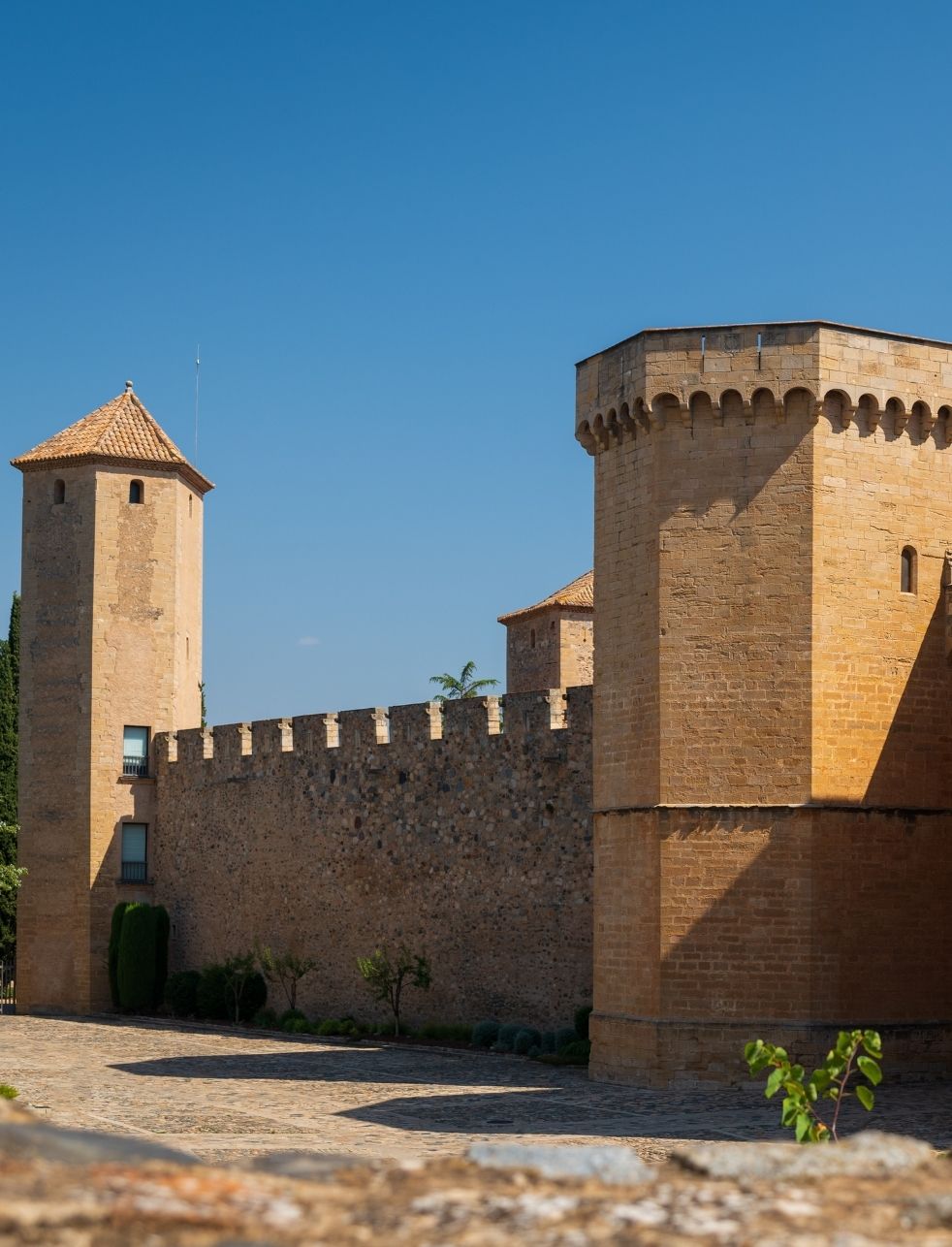
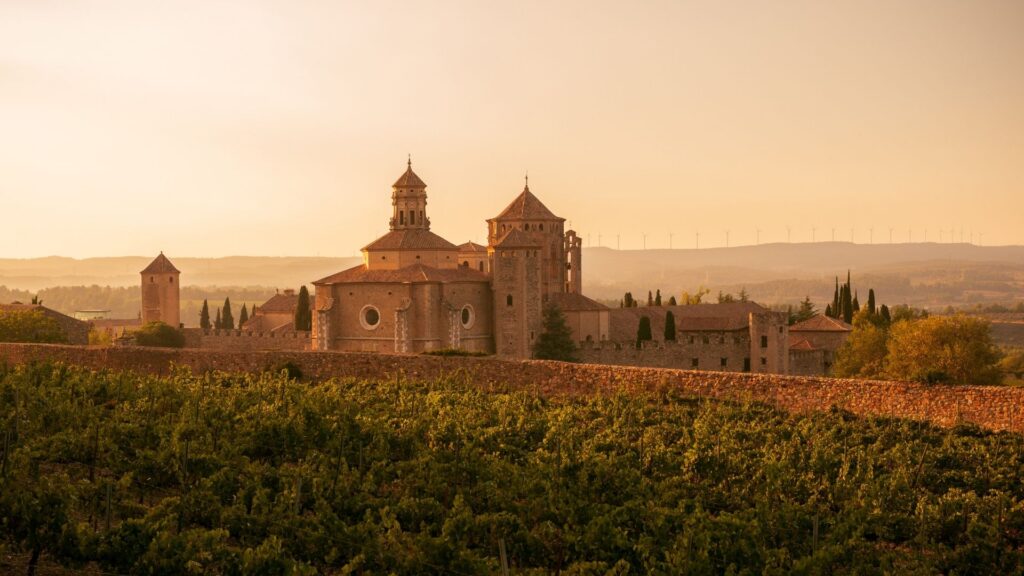
The Santa Maria de Poblet Monastery is very close to the towns of Vimbodí and L’Espluga de Francolí, nestled on the northern slope of the Prades Mountains, in a beautiful setting with abundant springs and the vast Poblet Forest, featuring varied and lush vegetation. The name comes from the Latin alameda (populetum); Poblet is an impressive architectural complex founded in 1151 that ranks among the most important monastic monuments in Europe. In addition to the magnificent church, an exceptional example of Cistercian art, almost all the buildings were constructed to meet the needs of a vibrant and expanding community, and have been preserved under the protection of the kings of the Catalan-Aragonese Confederation: especially since Peter III the Ceremonious (1336–1387) designated the monastery as the royal pantheon of the dynasty.
Poblet is the largest monastery on the Cistercian Route and the only one of the two men’s monasteries that still has a community of monks. In 1991, it was designated a UNESCO World Heritage Site.
Vallbona de les Monges Monastery
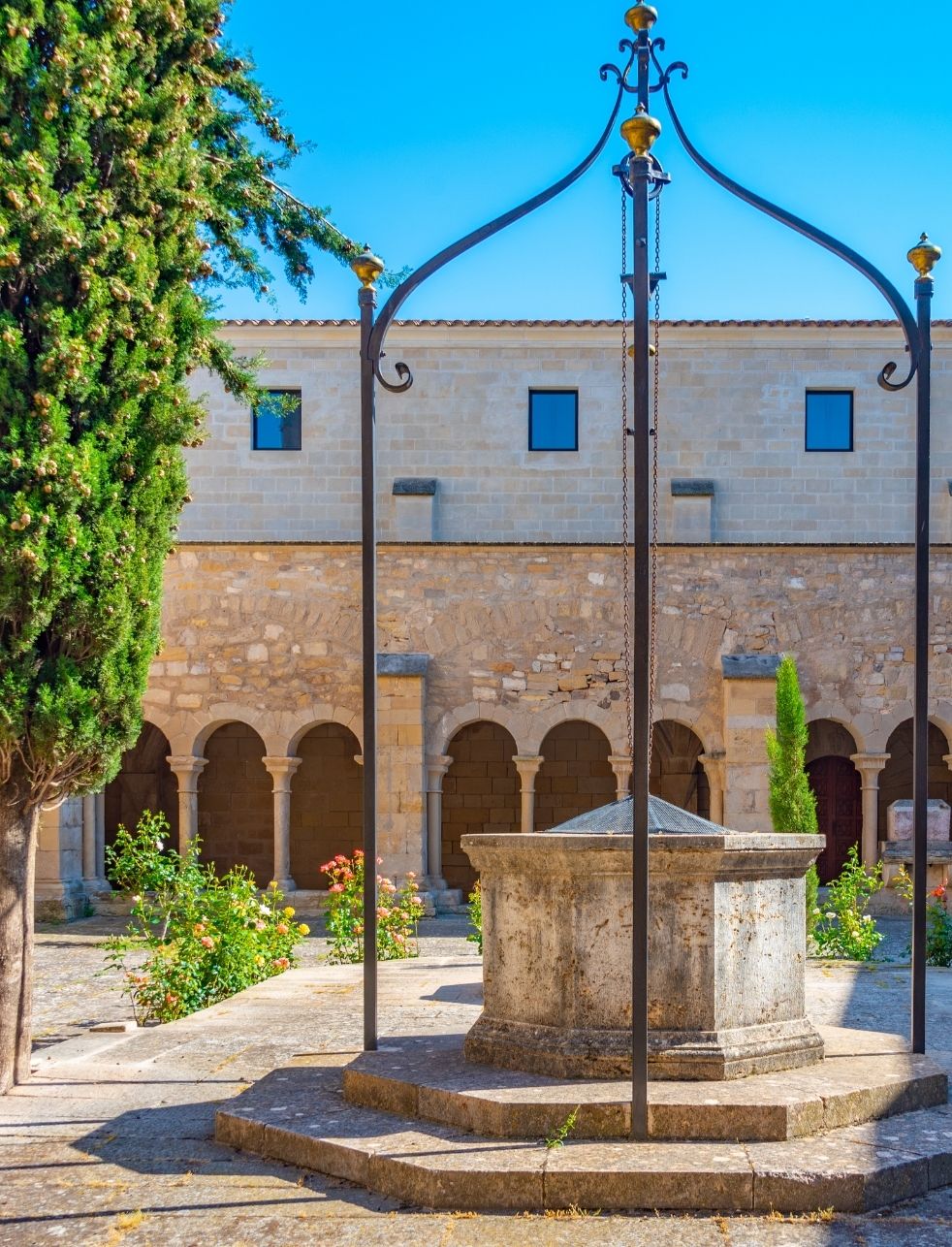
The Vallbona de les Monges Monastery is a unique place where visitors can spend time with the community of nuns. With eight hundred years of uninterrupted monastic history, it is the least known and most surprising treasure along the Cistercian Route.
It is the only women’s monastery along the route and the only one that has maintained an uninterrupted community for more than 850 years, except during times of war. The Vallbona Monastery is a precious, small-scale monastery of unique beauty; it is the clearest example of the importance of women in medieval times. Throughout its history, it has been led by numerous abbesses, daughters of the Catalan nobility.
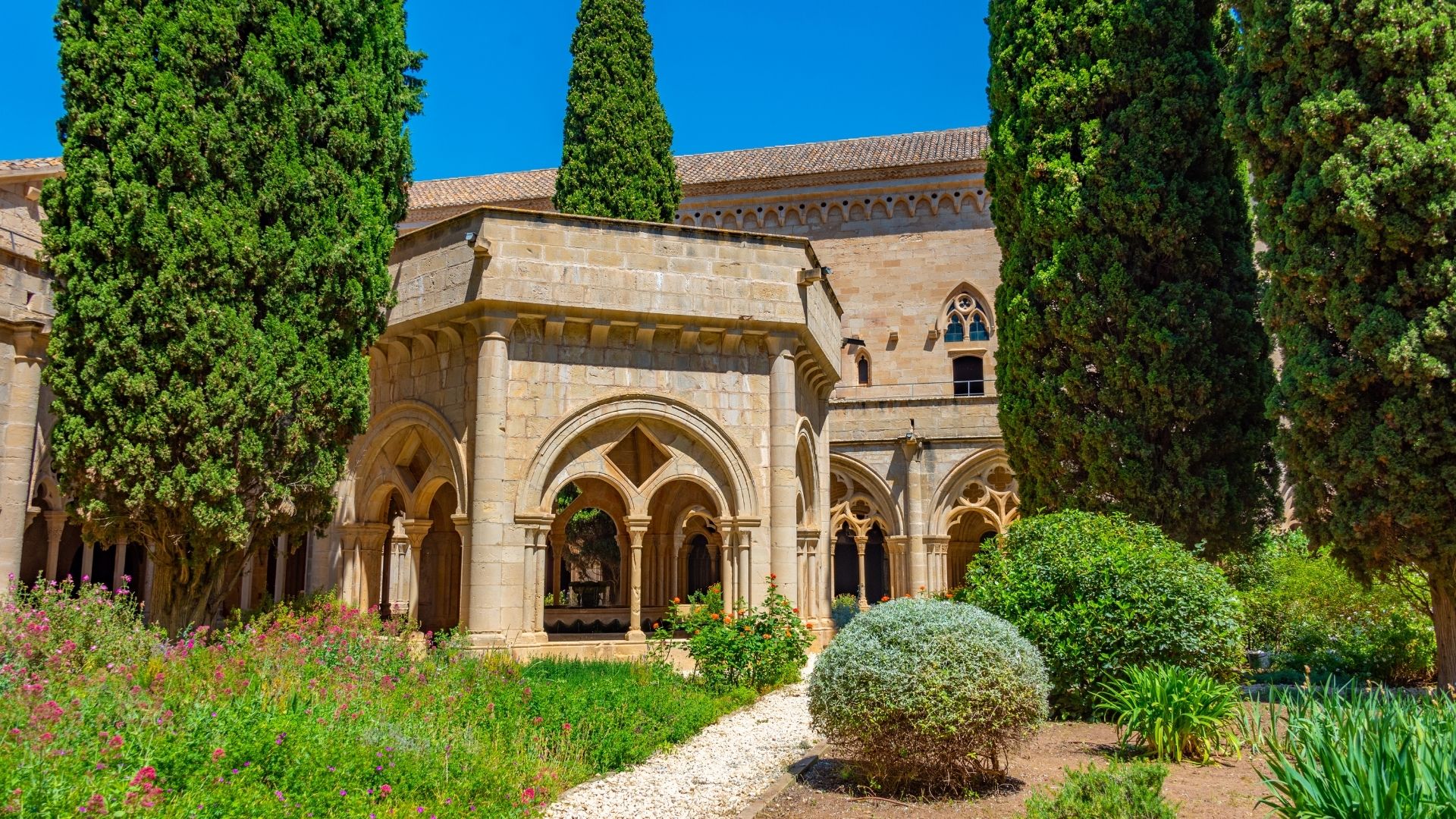
Of the monastery, we would like to highlight the two Gothic domes, the larger of which rests entirely on the church’s nave. It was designated a historic and artistic monument in 1931.
Santes Creus Monastery
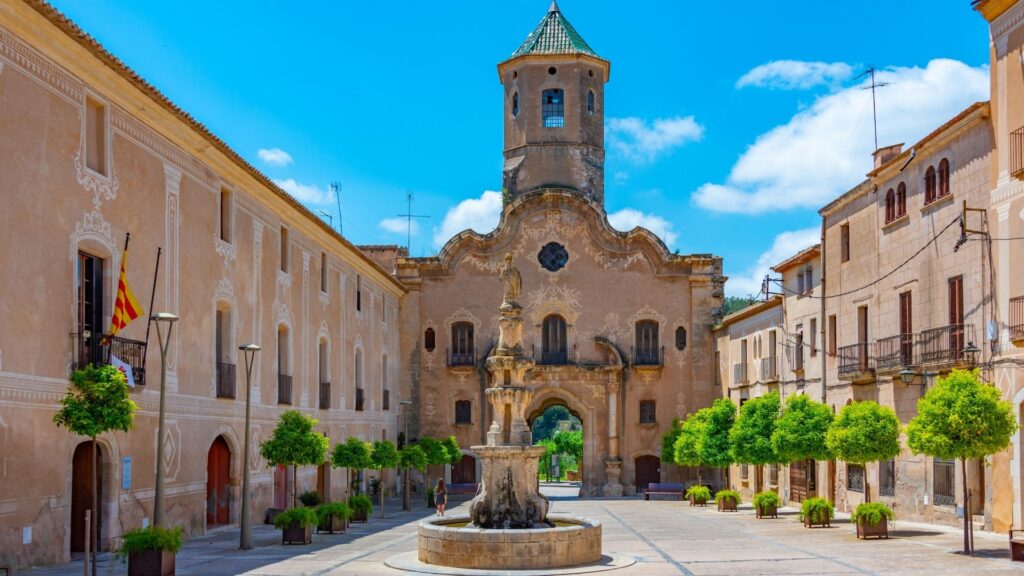
On the banks of the Gaià River stands the Monastery of Santes Creus, which was the center of one of the most important and influential monastic lordships in the Crown of Aragon. With its solid and austere architecture, the abbey reflects the canonical model of Cistercian monasteries.
Founded in 1160, Santes Creus reached its peak between the 13th and 14th centuries, due to its close ties to the nobility and the royal family. Kings Peter III of Aragon and James II, along with his wife Blanche of Anjou—patrons of the monastery—chose to be buried here, in two Gothic mausoleums near the high altar.
The monastery’s layout organizes the spaces according to the community’s needs. The church, which opened for worship in 1225, is an example of the transition from Romanesque to Gothic art. Although it conveys a sense of lightness and grandeur, it is a solid and austere structure. The splendor of the 14th-century cloister—the first Gothic-style cloister in the Crown of Aragon—is remarkable.

LA PINEDA
Ruta
del cister
Campground 30 minutes from the Ruta del Cister, the Cistercian Monasteries Route
From La Pineda de Salou campground, the Ruta del Cister is about a 30-minute drive away via the A-7 highway heading northwest. A full-day excursion will allow you to visit the three monasteries while enjoying the culture, scenery, and cuisine of the Catalan hinterland. Check with the front desk for the most up-to-date opening hours.
Associez cette escapade culturelle à une virée œnotouristique en province de Tarragone, une journée d’activités sportives et de plein air autour du camping ou une soirée dans l’ambiance de Salou et de La Pineda.
Vous aimez le patrimoine ? Découvrez les trésors de la province de Tarragone accessibles depuis notre camping.